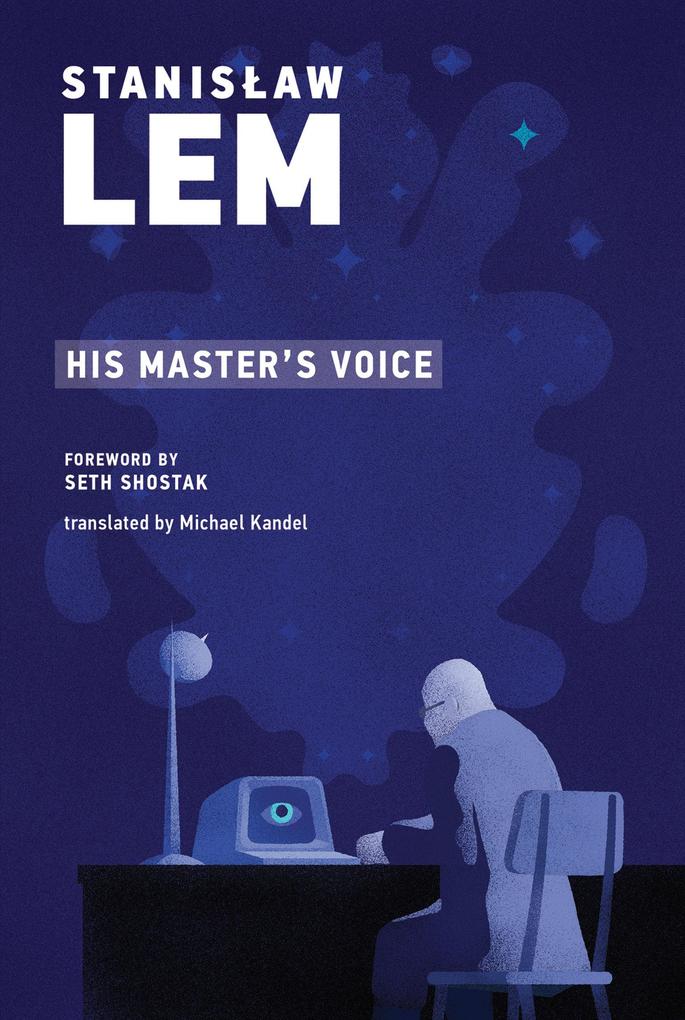
"Reading like a hybrid of Nabokov and Asimov, this book takes the form of a memoir by a mathematician who is recruited for a Manhattan Project scale effort to decipher the signal. The premise allows Lem, the Polish sci-fi master, to reflect on questions that are just as challenging today as they were when the novel was published, in 1968: Are we alone in the universe? Would we recognize nonhuman minds even if we found them? And could any alien be more dangerous to humanity than we are to ourselves?
The Atlantic
Such deadly wit, such deadly playful tightrope walking . . . a modern European version of Swift or Voltaire.
Peter S. Beagle, The New York Times
In a cycle of melancholy sci-fi novels written in the late nineteen-fifties and sixties Eden, Solaris, Return from the Stars, Memoirs Found in a Bathtub, The Invincible, and His Master s Voice Lem suggested that life in the future, however remote the setting and however different the technology, will be no less tragic. Astronauts disembark from a spaceship into the aftermath of an atrocity; scientists face an alien intelligence so unlike our own that their confidence in the special purpose of human life falters. Lem was haunted by the idea that losses can overwhelm the human capacity to apprehend them.
The New Yorker
Fourteen years after his death, the universe is still struggling to catch up with the vast creative force that was Stanis aw Lem. And for my money, it won't be surpassing him anytime soon . . . Enjoying the genius of Lem requires readerly dexterity and a willingness to go wherever the author takes you . . . These marvelous, absorbing and often hilarious books make our weary universe seem pale and undistinguished by comparison.
The Washington Post
The release of these new volumes seems to expand the possibilities of what a university publisher can do.
LitHub
This thorough, intellectual take on a classic hard sci-fi trope is Lem at his best.
Publishers Weekly, starred review